Fiber Cement Siding vs Stucco: Which Costs Less Over 20 Years?
Fiber cement siding and traditional stucco look like they belong on different streets. Fiber cement is cut, nailed, and painted like wood lap siding. Stucco is troweled on as a paste and hardened into a continuous shell. Both hold up for decades when detailed correctly, but they fail differently, cost differently to repair, and suit different climates.
The real comparison is not the first invoice. It is the cost of keeping water out of the wall for 20 years. This guide walks through installed cost, climate behavior, maintenance cycles, resale, and the regions where each makes sense. Estimates are 2025–2026 US planning ranges, not bids.

The two systems are not interchangeable
Fiber cement is a cavity cladding. On a wood-framed house, the siding is installed over a weather-resistive barrier and usually a drainage plane or air gap. Rain that gets behind a lap joint hits the barrier and drains down to flashing at the bottom. That gap also lets moisture vapor escape. Window and door flashing remain the weak points, but the wall has a second chance to dry.
Traditional stucco is monolithic. Three-coat stucco goes over lath with a scratch coat, brown coat, and finish coat. One-coat stucco is thinner but still a continuous cement membrane. There is no built-in drainage cavity unless the installer adds a drainage mat or rain-screen detail. Water that gets through a crack or failed sealant can sit against the sheathing for months.
This matters because repairs follow the system. A cracked stucco wall may need selective demolition to find the leak and dry the sheathing. A fiber cement wall can often be opened from the outside one board at a time. The systems are not interchangeable on the same substrate without changing flashing, trim depth, window bucking, and the bottom termination.
Installed cost comparison
Estimates below assume a 2,000 sq ft two-story wood-framed house with about 1,800 sq ft of wall area, standard trim, no tear-off of existing cladding, and no structural repair. Costs are per square foot of wall surface.
| System | Material | Labor | Finish | Total per sq ft |
|---|---|---|---|---|
| Fiber cement lap siding | $2.50–$5.00 | $3.00–$6.50 | $0.50–$2.00 | $6.00–$13.50 |
| Fiber cement panel / vertical | $2.00–$4.50 | $2.50–$5.00 | $0.75–$2.00 | $5.25–$11.50 |
| Traditional three-coat stucco | $2.00–$4.50 | $4.50–$8.00 | $1.00–$3.00 | $7.50–$15.50 |
| One-coat stucco over foam or lath | $2.50–$5.00 | $3.50–$6.50 | $1.00–$2.50 | $7.00–$14.00 |
Next step
Get three written quotes before you commit
Siding prices swing 30-40% between contractors for the same scope. Request itemised quotes on the same wall area, trim package and disposal, then compare line by line.

The spread between a clean lap siding job and three-coat stucco is often $2–$4 per sq ft. On 1,800 sq ft of wall, that is roughly $3,600–$7,200 at installation. Stucco can close the gap on simple single-story walls where scaffolding is low and the substrate is already prepared. The first cost table hides what happens after year five.
Climate performance: wet, dry, freeze-thaw, and humidity
Fiber cement was designed for wet climates. The boards are cement, sand, and cellulose fiber; they do not rot, and most manufacturers allow the bottom course to sit close to grade with proper clearance. The drainage cavity behind the siding gives the wall assembly a way to dry after wind-driven rain. In Houston, New Orleans, or Charleston, that second chance is worth money.
Stucco performs best in dry climates. In Phoenix, Albuquerque, or inland California, there is little rain to enter a crack, and low humidity keeps small surface imperfections from becoming moisture problems. In humid or coastal zones, monolithic stucco relies on sealant at every window, penetration, and control joint. One failed joint can wet the sheathing for months before brown staining appears at the surface.
Freeze-thaw cycling punishes both but differently. Water trapped in a stucco crack freezes and widens the crack. Fiber cement sheds water at laps, but poorly painted edges can absorb water and spall in repeated freeze-thaw cycles. Humidity drives the biggest difference: a fiber cement wall with an air gap can dry to the outside; stucco can stay wet longer after a leak.
| Climate condition | Fiber cement behavior | Stucco behavior |
|---|---|---|
| Wet, frequent rain | Drains and dries if flashed correctly | Depends on sealant and crack control |
| Dry, low rainfall | Stable, less paint stress | Excellent long-term performance |
| Freeze-thaw | Edge wicking risk if unpainted | Crack widening at transitions |
| High humidity | Dries through cavity | Higher hidden moisture risk |
The 20-year number most people miss
On the same 1,800 sq ft wall area, first install for fiber cement lap siding runs roughly $10,800–$24,300. Traditional three-coat stucco runs roughly $13,500–$27,900. That is a first-cost gap, but maintenance is where the 20-year number shifts.
Fiber cement usually needs one or two repaints over 20 years, plus caulk and isolated board replacement. Stucco needs less frequent repainting but more attention to cracks, control joints, and sealant. If a leak occurs behind stucco, the repair can cost as much as a small siding replacement because the wall has to be opened, dried, and retextured.
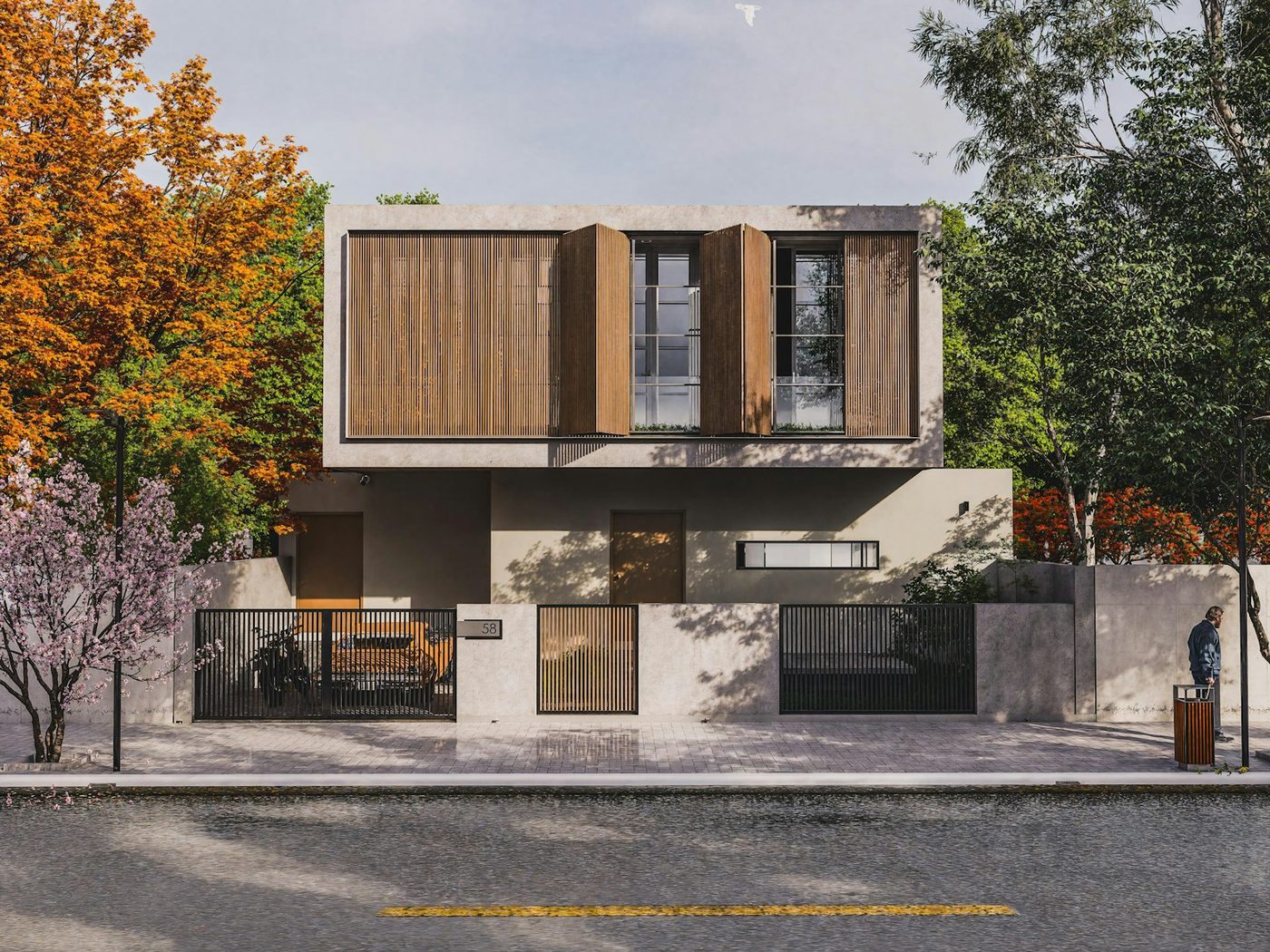
Maintenance and repair cycles over 20 years
A maintenance plan is the difference between a 20-year wall and a tear-off. Fiber cement is not zero-maintenance: paint is the main wear item, and caulk at butt joints and trim joints needs replacement every five to seven years. Stucco needs less frequent repainting but more regular inspection of cracks and sealant at windows, doors, and roofline intersections.
| 20-year task | Fiber cement lap siding | Stucco |
|---|---|---|
| Repaint / topcoat | Usually 1–2 repaints; $4,500–$8,500 each on 1,800 sq ft | Often 1 elastomeric coat; $3,600–$6,300 |
| Crack and joint patching | Caulk joints, replace damaged boards; $300–$1,200 over 20 years | Hairline crack fill, retexture; $800–$2,500 over 20 years |
| Moisture repair | Less frequent; flashing or isolated sheathing repair $800–$3,000 | Higher cost if water gets behind: $3,000–$12,000 for opening, drying, and re-stucco |
| Typical cycle | Paint at year 8–12, sometimes year 18 | Topcoat at year 10–15; sealant every 5–7 years |
These maintenance figures assume a competent original install. Poor flashing or missing drainage on either system can produce repairs outside these ranges. The table also explains why stucco can look cheaper on paper in a dry climate but become expensive in a wet one: the moisture repair line is the wildcard.
Resale and curb appeal
Fiber cement reads as painted wood. That is a safe resale look in most US markets because it matches neighborhoods built with lap siding, board-and-batten, or shake. Stucco reads as Mediterranean, Spanish, or modern. In Albuquerque, Scottsdale, or Coral Gables, stucco is the expected finish; in Chicago, Atlanta, or Seattle, it can look like a patch on a house that should have siding.
Curb appeal depends less on material than on crispness. Fiber cement lines stay straight, but joints can telegraph if framing moves. Stucco gives a smooth, shadow-free wall, but water stains and crack repairs show as texture mismatches. Buyers rarely ask for a wall system by name; they ask whether the walls look dry, straight, and recently maintained. Explore fiber cement project examples or stucco exterior finishes to see how each reads on a finished house.
Which suits which house and region
Choose fiber cement when the house has a complex roofline, many gables, bump-outs, or window clusters. Each transition is a place to flash and lap. Fiber cement also suits wet, humid, or freeze-thaw-heavy climates, and neighborhoods that expect a painted wood look. It is easier to spot-repair without retexturing a whole wall.
Choose stucco when the house is in a dry climate, the walls are simple, and the home is block or solid with few penetrations. Stucco also fits architectural styles that call for a monolithic finish. If you choose stucco in a wet climate, budget for control joints, drainage details, and elastomeric topcoat on a strict cycle.
In the Pacific Northwest and Southeast, fiber cement often wins on moisture logic. In the Southwest and inland California, stucco is frequently the lower-risk choice. Florida sits between the two: stucco over block is common, but wood-framed coastal homes often do better with a drained fiber cement wall.
How we estimated these figures
All costs are planning ranges for 2025–2026, not quotes. We base them on current material pricing for mid-grade products, contractor labor for a 2,000 sq ft two-story house with 1,800 sq ft of wall area, standard trim, and simple access. Labor includes prep, flashing, fasteners, waste, and primer or finish where noted. We assume no existing cladding tear-off, no permit fees beyond standard, and no structural repair.
Ranges are wide because local labor varies from roughly $45 to $85 per hour for specialty siding and plaster crews, and because scaffolding or three-story access changes labor quickly. Paint and elastomeric coating prices move with surface prep and the number of windows and corners masked. We did not use survey statistics, manufacturer lifetime claims, or appraiser percentages. The 20-year maintenance figures are summed from typical trade repair costs.
What this guide does not cover
This guide covers traditional portland cement stucco and fiber cement lap or panel siding. It does not cover EIFS, synthetic acrylic stucco, stone veneer, brick, vinyl, wood, or metal wall systems. It does not cover full tear-off and disposal of existing cladding, hidden termite or rot repair, window and door replacement, or commercial and multifamily building envelopes. Local code upgrades such as continuous insulation, ice barrier, or seismic strapping can also change the installed cost and are outside these ranges.
Next step
Get three written quotes before you commit
Siding prices swing 30-40% between contractors for the same scope. Request itemised quotes on the same wall area, trim package and disposal, then compare line by line.
FAQ
Which is cheaper to install: fiber cement or stucco?
On a typical 1,800 sq ft wall area, fiber cement lap siding usually costs $6.00–$13.50 per sq ft installed, while traditional three-coat stucco runs $7.50–$15.50. Fiber cement is often the lower first cost, but access, substrate condition, and finish choices can flip the spread on a specific house. Always compare labor and finish lines separately.
Does stucco crack more than fiber cement?
Stucco is monolithic, so building movement concentrates stress at corners, window heads, and control joints. Hairline cracks are common and most are cosmetic. Fiber cement moves at laps and butt joints, so cracks are less visible but caulk lines need regular upkeep. Both require proper joint design. In freeze-thaw climates, stucco cracks can widen without repairs.
Can I install fiber cement over stucco?
You can often install fiber cement over stable stucco using furring strips to create a drainage plane and level surface. The stucco must be sound and dry, and windows, trim, and sills may need extension. This is common for cosmetic changes but adds roughly $1.50–$3.00 per sq ft for furring and re-trimming. Confirm substrate condition before quoting.
Which is better in a hurricane or hail region?
Both can perform, but fiber cement has an edge on wood-framed walls because the drainage cavity helps dry wind-driven rain. Stucco is strong when applied over block. Hail can chip stucco and crack fiber cement boards; repair is usually easier with fiber cement because single boards can be replaced instead of retexturing a whole wall. Local code governs fastening for wind loads.
How long does each last before replacement?
With correct flashing and maintenance, fiber cement cladding can last 30–50 years before boards need widespread replacement. Traditional stucco can also last 30–50 years if the substrate stays dry and cracks are managed. Failure usually comes from water intrusion, not age alone. Many walls need replacement because of neglected flashing, not exhausted material.
Cost ranges are US planning estimates for 2025–2026. They are not quotes, appraisals, or warranties. Local labor, substrate condition, code requirements, and access will change your installed price. Always get three written, itemized quotes for the same scope before committing.