Fiber cement installers quote by the square — 100 square feet of wall — but most homeowners hear the number as “per square foot.” That shorthand causes real confusion. A quote of $10 per square foot can mean $10,000 or $17,000 for the same house depending on what the contractor actually measured.
The reason is simple: your house’s floor area and its exterior wall area are not the same number. A 2,400-square-foot single-story ranch might have 3,100 square feet of wall area. A two-story home with the same floor area often has 2,600. A raised ranch with a walkout basement has more. Fiber cement is priced on wall area — the vertical surface receiving cladding — not living space.
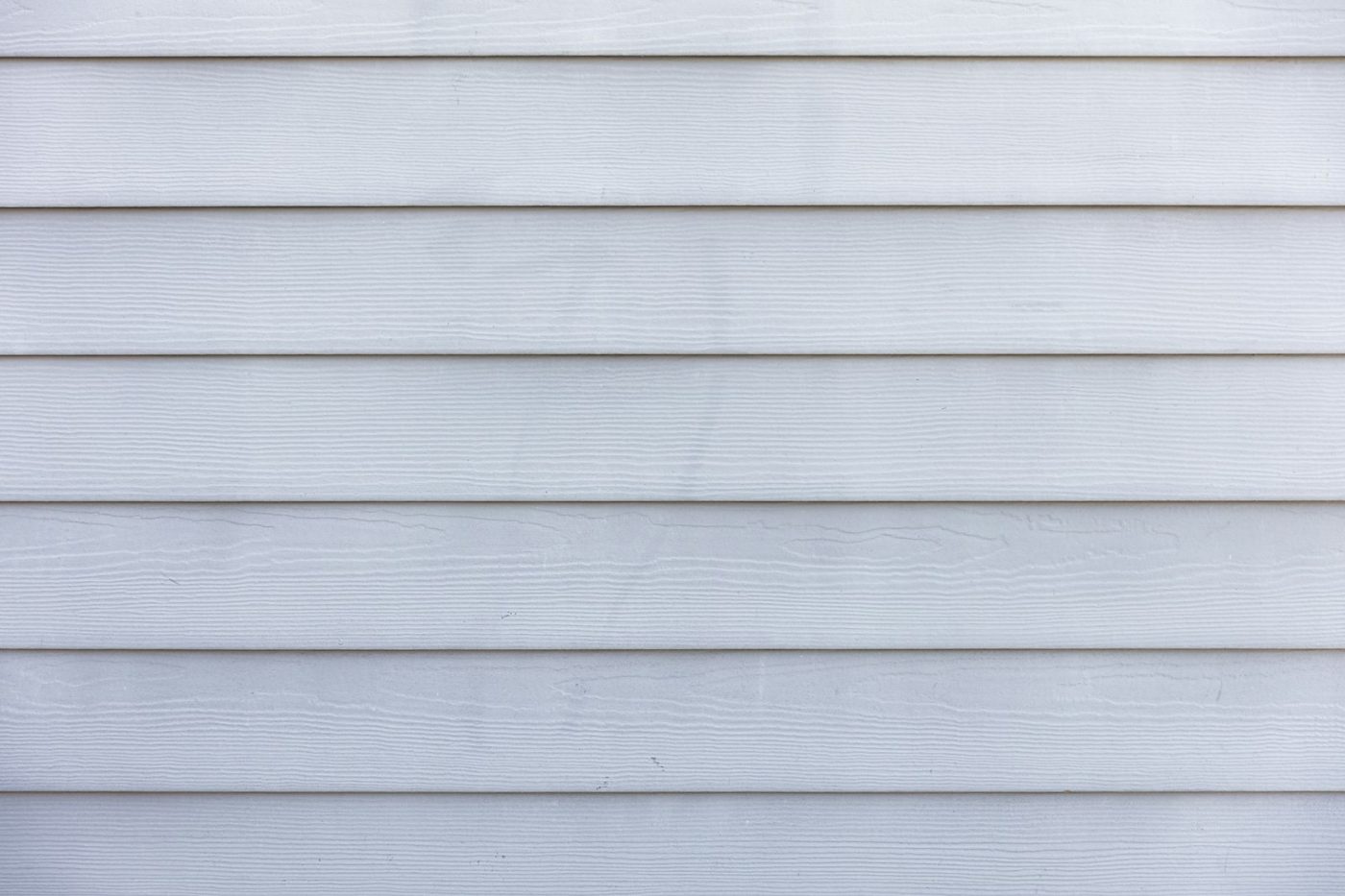
What “per square foot” actually measures
A legitimate siding quote starts with a wall-area takeoff. The estimator walks the house and multiplies the length of each exterior wall by its height, then subtracts only the largest openings — a standard garage door, a picture window — or, in the messy real world, he does not subtract anything and calls it “waste allowance.” That matters. If he uses gross wall area and does not subtract openings, the same house suddenly has 10-14% more billable square footage.
You can check the number. Measure the perimeter at the outside of the foundation, multiply by the wall height from foundation to soffit, and add gable triangles: half the base width times the height of the triangle. Compare that figure to the quote. If the contractor’s wall-area figure is 20% higher than your math, ask for the back-up. You are not arguing about a few pounds of scrap; you are arguing about real money.
Installed cost per square foot
These are planning ranges for a typical North American fiber cement lap siding job in 2025-2026, quoted per square foot of net measured wall area, before regional markups and before tax. Expect a total range of $8.50 to $16.50 per square foot installed for primed board with site painting, and $10.00 to $18.00 for factory-finished board with no site painting.
| Line item | Low $/sq ft | High $/sq ft | Notes |
|---|---|---|---|
| Fiber cement board (primed lap) | $3.00 | $5.00 | 6-1/4″ to 8-1/4″ exposure; price varies by profile |
| Labor (hang, nail, cut, caulk) | $3.00 | $6.00 | Two- to three-person crew, production rate dependent |
| Trim, fascia, corner boards | $1.00 | $2.50 | Fiber cement trim or primed wood; aluminum on cheap end |
| House wrap, flashing, tape | $0.75 | $1.50 | Includes window head flashing and penetrations |
| Site painting (if primed board) | $1.50 | $3.00 | Sprayed and back-brushed; two coats on new board |
| Total, primed + site painted | $8.50 | $18.00 | Midpoint around $11.50-$12.50 |
Next step
Get three written quotes before you commit
Siding prices swing 30-40% between contractors for the same scope. Request itemised quotes on the same wall area, trim package and disposal, then compare line by line.
Why the rate moves
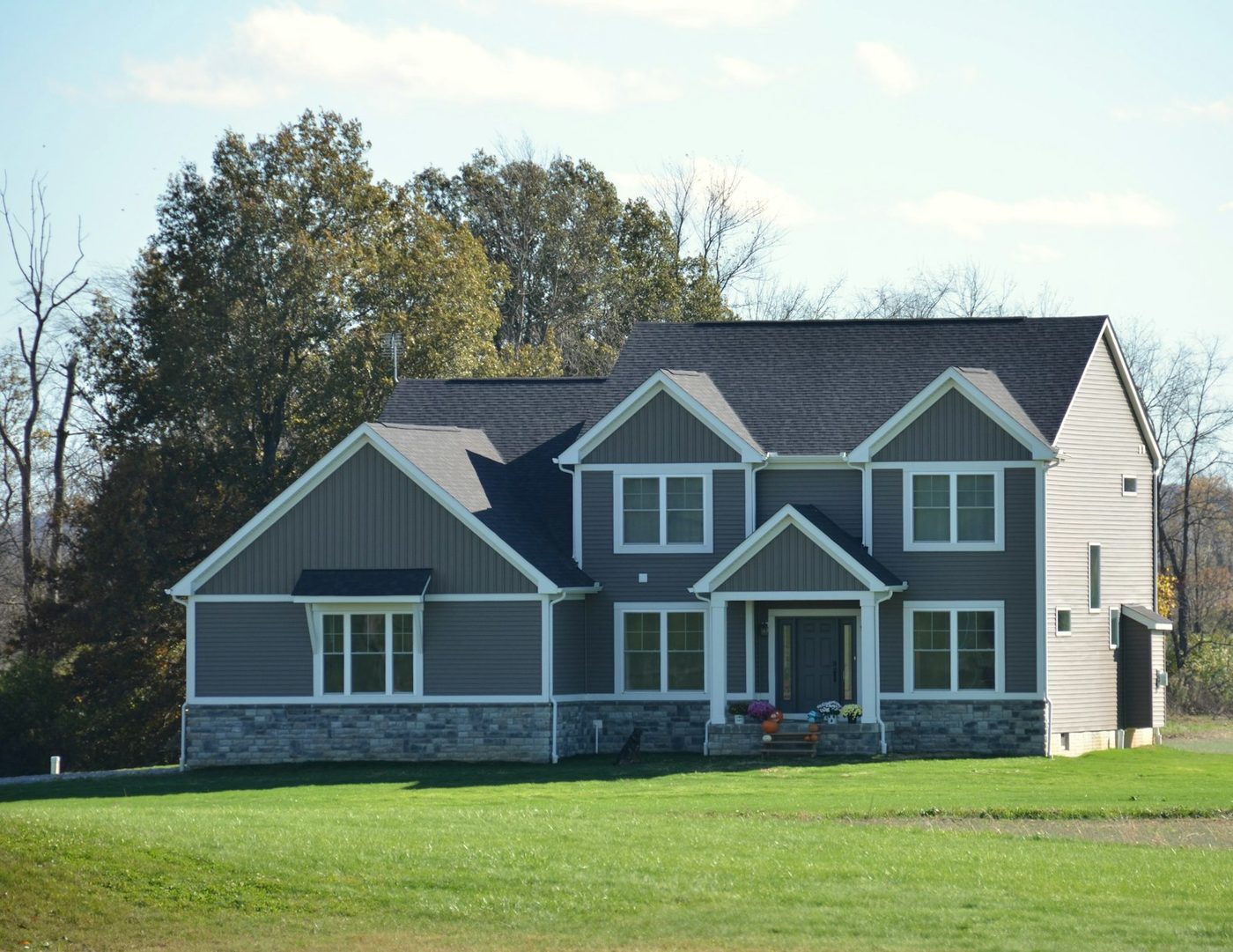
A single per-square-foot number only works on a single-story box. On a real house, every feature changes how fast a crew works. A full two-story wall requires ladders, pump jacks or scaffolding. Every gable adds angled cuts and slower, awkward nailing. Corners take trim; windows take J-channels, flashing and caulk. A wall with four windows and two corners may have the same square footage as a blank wall, but the crew spends 40% more labor on it.
Removal of old siding is its own line item, often $1.50 to $4.00 per square foot stripped and disposed. Waste on fiber cement is another real cost. Boards crack at the nail line, factory ends get cut, and partial pieces around windows get discarded. Plan on 8-12% waste over the net wall area; steep gables and diagonal detail push that to 15%.
Primed vs factory-finished
Primed fiber cement arrives with a primer coat only. The crew hangs it, caulks it, and then a painter — sometimes the same company, often a sub — applies two full site coats. That adds $1.50 to $3.00 per square foot, a day or more of different weather windows, and a moving target for completion. The upside is that you can pick any color after the board is hung.
Factory-finished fiber cement arrives with the color baked on, usually in a 15-year finish warranty. It costs $1.00 to $2.00 more per square foot on the board line, but you delete the site-paint labor and the scheduling risk. For cold climates or short build seasons, factory-finished board often wins the value argument. For exact custom colors, primed still owns the market.
Lap vs board-and-batten vs shingle panel rates
Profile changes the installed rate even before the board cost moves. Lap is the cheapest to hang because it is repetitive, horizontal, and fast. Board-and-batten runs 30-40% more in labor because every vertical batt is a separate line, a separate nail row, and a separate finish joint. Shiplap and individual shingle panels are slower still, and factory-finished shingle panels carry a higher board price for the same wall area.
| Profile | Installed range $/sq ft | Labor hit | Best use |
|---|---|---|---|
| Smooth or wood-grain lap | $8.50 – $15.50 | Baseline | Most homes; simplest gable and wall geometry |
| Board-and-batten | $10.50 – $18.50 | 1.3x – 1.5x lap | Farmhouse, craftsman, single-story accent walls |
| Shingle / shake panels | $12.00 – $21.00 | 1.4x – 1.8x lap | Accent gables, small wall areas, period styles |
If you see three quotes and the cheapest one is a board-and-batten estimate while the others priced lap, that is not an apples comparison. Ask every bidder to break the wall by profile, or at least state which profile drives the line item.
How labor is priced
Crews price fiber cement labor three ways: by the square (100 sq ft of installed wall), by the hour, or as a flat day rate for the full job. The square rate is the one you want in writing. It ties payment to measured work. Hourly and day-rate quotes leave you holding the risk if the crew is slow.
A fair production rate for a two-person crew on straightforward lap over existing plywood or OSB is 2.5 to 4 squares per day once the first course is set — roughly 250 to 400 square feet per day. Add board-and-batten and that drops to 1.5 to 2.5 squares. A crew that quotes 8 squares a day on a complex, two-story home is either going to rush the nailing pattern or bill you for labor they will not complete. A crew that quotes one square a day is losing you money. Ask for the production assumption in the quote. If they will not write it, that is a flag.
Five questions that reveal a padded quote
You do not need to become an estimator. You need to ask five questions and watch how fast each contractor blinks.
1. “What wall area did you measure, and can I see the takeoff?” A straight answer is a number with dimensions. A padded quote hides behind “about 2,000 square feet” and will not show floor-to-wall math.
2. “Does this include removal and disposal, or is that a change order?” Strip-and-dispose is often excluded and then appears as a surprise $2,000 line. Make them write it into the scope.
3. “What waste factor are you carrying?” Ten percent is normal. Eighteen percent on a simple ranch is a markup in disguise. The number should be written on the quote, not waved off.
4. “Is trim included per wall area, or priced separately by the linear foot?” Trim priced as a separate linear-foot line is legitimate and usually more accurate. Trim folded into a high square-foot rate is how you pay three times for the same corner board.
5. “Who paints it, and is painting on your contract or mine?” If the quote is primed board only, the paint is not free just because a painter was mentioned. Get the paint scope in writing or hold back $2 per square foot in your budget.
How we estimated these figures
These ranges come from current US planning data: supplier list prices for fiber cement lap, trim and factory-finished board in 2025-2026, combined with typical labor bids in mid-sized markets. We assume a two- to three-person crew, normal access, a single-story or simple two-story home, and no engineered scaffolding. Board cost is based on 8-1/4″ exposure lap and primed board with no exotic profile. Labor ranges reflect the spread between a competent independent crew and a large remodeler with overhead and warranty administration. All figures are planning estimates, not bid guarantees. Your zip code, your wall condition, and your town’s permit and debris rules will move the final number.
We did not run a national survey, and we distrust any article that claims one without a dataset. These are field-derived planning ranges consistent with what U.S. homeowners see on itemized siding proposals in 2025-2026.
What this guide does not cover
This guide sets aside several cost drivers that can double or halve the final check. It does not cover full house sheathing replacement, which is a framing problem, not a siding problem. It does not cover stone, brick, or stucco accents, which are quoted separately and can run $15 to $40 per square foot installed. It does not cover structural repairs to rotted rim joists, missing shear panels, insect damage, or water intrusion behind the cladding. It does not cover window replacement, door replacement, gutters, or exterior insulation systems. If your quote includes those items, ask for them as separate line items so the siding number stays honest.
Next step
Get three written quotes before you commit
Siding prices swing 30-40% between contractors for the same scope. Request itemised quotes on the same wall area, trim package and disposal, then compare line by line.
FAQ
Is the quoted square footage the same as my home’s square footage?
No. Siding is quoted on exterior wall area, not interior floor area. A single-story home usually has more wall area than floor area; a two-story often has less. Ask the contractor for the wall-area takeoff and compare it to your own perimeter times wall height.
Does fiber cement siding require special installation?
Yes. Boards must be nailed at framing, spaced at butt joints according to the manufacturer’s chart, and gapped at trim and flashings to allow movement. Improper nailing — overdriven or too close to the edge — voids the warranty and leads to cracked boards, which is exactly what a low-bid crew will leave behind.
How long does fiber cement siding last?
Manufacturers typically state a 50-year product life for the board and a 10-15 year finish warranty on factory-applied color. The installed assembly lasts as long as the sheathing and flashing behind it. A properly flashed fiber cement wall can outlast its owner; a poorly flashed one fails at the windows in ten years.
Can I install fiber cement siding myself?
A competent DIYer with a helper can hang fiber cement lap on a single-story garage or shed, but cutting produces silica dust, boards are heavy, and the nail pattern is unforgiving. For a full house, the learning curve is your own wall. Most homeowners come out ahead hiring a crew and spending their time on the quote comparison.
Which is cheaper: vinyl or fiber cement?
Vinyl is cheaper installed, usually $4 to $8 per square foot versus $8 to $18 for fiber cement with paint. Fiber cement costs more up front but performs better against impact, weather hardness, and repaint cycles. The choice is not about cheap; it is about whether you want to pay once or pay twice.
Disclaimer: All cost figures in this article are planning estimates for 2025-2026 U.S. markets, provided for comparison only. They are not bids, nor a substitute for local written quotes. Actual costs vary with your home’s condition, region, access, labor availability and material selections.